
Explore St Paul’s Letter to the Ephesians to understand the mystery of Christ and Christian unity. Read our complete guide today!
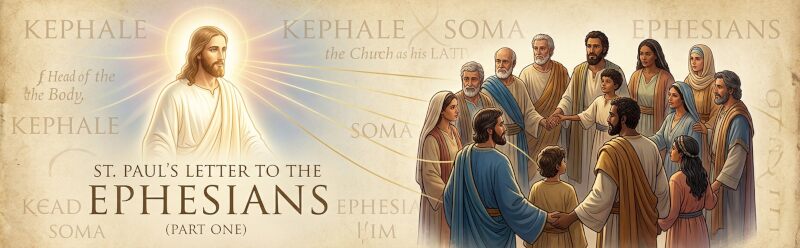
The St Paul Letter to the Ephesians offers a profound exploration into the mystery of Christ that no single theological image can fully exhaust. Throughout the New Testament, the Apostle Paul highlights distinct aspects of Jesus in each of his epistles. In Romans, he presents Christ establishing the New Covenant through His blood. In Philippians, he highlights Christ pouring Himself out in ultimate humility. However, in the Epistle to the Ephesians, Paul centers his teaching on Jesus as the supreme head of the body, which is the Church. (For more background, see the USCCB Letter to the Ephesians).
Written during Paul’s imprisonment in Rome, this foundational text demonstrates how Christ unites believers across the world to direct His divine mission. By exploring the St Paul Letter to the Ephesians, we discover how deep Christological truths directly shape daily practical conduct and spiritual growth.
The Christological Core: Christ as Head of the Body
In the opening chapters of the St Paul Letter to the Ephesians, Paul lays out a breathtaking vision of God’s eternal plan. Long before the creation of the world, God mercifully chose to send His Son to redeem humanity. A pivotal revelation in this epistle is that salvation extends beyond Israel to include the Gentiles. Christ reconciles the entire world by incorporating all believers into a single, unified body—making it possible for everyone, regardless of heritage, to be adopted into the household of God.
Even while facing physical isolation in captivity, Paul felt deeply connected to the universal Church because of Christ’s supreme authority:
“And [God the Father] has put all things under his feet and has made him the head over all things for the church that is his body, the fulness of him who fills all in all.” — Ephesians 1:22–23
Understanding this core Christological foundation clarifies why Paul gives specific moral advice. The Church, as the Church as the Body of Christ, derives its whole life and mission directly from Jesus. His directives are not merely personal opinions or Pharisaic leftovers; they flow directly from the nature of Christ Himself.
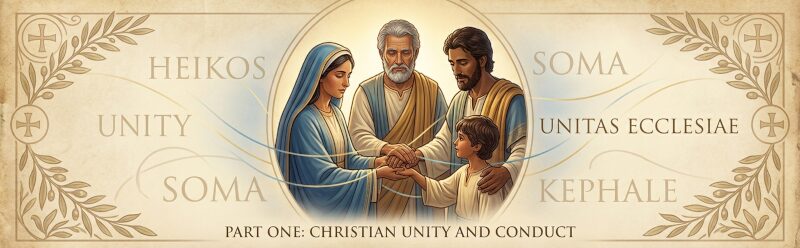
St. Paul’s Call to the Ephesians
The midsection of the epistle expands on the specific purpose of the Church. Christ established the Church to reveal what was hidden from past generations: that salvation belongs to all nations. This universal scope reflects the true meaning of the term “Catholic,” which translates in Greek to “throughout the whole world.”
To honor this universal calling, Paul urges Christians to embody Christian unity in their everyday relationships and church communities:
- Walk Worthily: Lead a life worthy of your divine calling with complete humility and meekness.
- Practice Patience: Bear with one another in love through every trial.
- Preserve Peace: Eagerly maintain the unity of the Spirit through the bond of peace.
Paul grounds his call to peace in a powerful litany of oneness—exploring the deeper Theology of Unity in Ephesians: one body, one Spirit, one Lord, one faith, one baptism, and one God and Father of us all.
Living as Members of One Body
Because Jesus is the head of the Church, every member must naturally follow where the head directs. This obedience is not driven by servile fear, but by willing cooperation rooted in “the grace given to each of us in the measure of Christ’s gift” (Ephesians 4:7).
As we reflect on the St Paul Letter to the Ephesians, we are reminded that our unity, mission, and personal conduct are inseparable from the mystery of Christ. By living under His headship, we reflect His peace and truth to the surrounding world.
(Continued Tomorrow)
May God Bless You and Grant You His Peace!