
Embracing the Present Moment
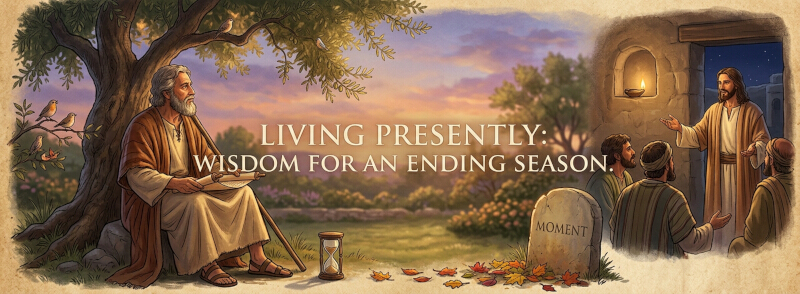
Have you noticed how much faster time seems to fly? As we near the end of the Church’s liturgical year, our Sunday readings intentionally point us toward end times, and today’s selections feel particularly poignant. Both Ecclesiastes and Jesus urge us to pay close attention to the fleeting nature of our lives, challenging the modern rush of our daily routines.
In the first reading (Ecclesiastes 11:9—12:8), the narrator appears to sum up the profound wisdom he gathered through a long, observant life. He speaks with clarity, yet in the Gospel (Luke 9:43-45), the apostles struggle to grasp Jesus’ clear warnings that he will soon be handed over and killed. Despite his direct words, they do not truly understand that his time with them in the flesh is drawing to a close.
Savor Youth, but Prepare for Judgment
Ecclesiastes instructs his students to enjoy their youth fully while they have it. But he couples this joyful invitation with a solemn reminder: they must remain aware that God will bring judgment for their actions. His message is a blend of upbeat energy that swiftly turns reflective—”put away trouble from your presence, because the dawn of youth is fleeting.”
Practical and truthful, this ancient author does not shy away from reality. He has learned from experience to no longer let his days slip by without meaning.
Reconsidering the End and Counter-Cultural Presence
His wisdom makes me pause and reflect on how much of my own everyday life slides by, sometimes completely devoid of deeper meaning. Each week, I wonder where the time went. When I was younger, I desperately wanted time to fly, but now I find myself wishing it would slow down. This might explain why Ecclesiastes’ words make me feel a little uncomfortable.
We live in a culture where rushing from one moment to the next is standard practice. Our natural cycle relating to time is to constantly ask, “Where do I have to be next?” and the days and weeks inevitably run together. Ecclesiastes invites us to radically reconsider this approach.
We should be focused on living in the present moment. Although many people in our Western culture have heard this concept, we far more readily understand being busy. Thus, the invitation to seriously consider the end of our lives, or even the end of time itself, feels counter-cultural. It can provoke discomfort because it forces us to look at life’s ending point, a reality we often work hard to ignore. Ecclesiastes advises that we deliberately create slowing down so that we can view the world through different lenses.
ACTION STEP: For one hour today, put down your phone and deliberately listen to the sounds around you, noticing things you normally ignore.
Paying Attention to the Wisdom We Hear
This author makes us pay attention because his perspective sounds uniquely impactful. At the conclusion, we hear the familiar, humbling line spoken throughout the Lenten Season: “remember, mankind, that you are dust and into dust you shall return.” This stark reminder forces the realization that life, as we currently experience it, will one day end. This conclusion points forward to the day when Jesus will establish a new covenant with humankind.
We look at today’s readings through the eyes of two seasoned teachers: both Ecclesiastes and Jesus. As we navigate the hum of our everyday lives, let us intentionally tune in to their wisdom. When everything settles, we will not face judgment on how busy we kept ourselves, but rather on how we used the gifts we were given.
Embracing the present allows us to genuinely give thanks to God for every moment we are here. If you are struggling with this, explore resources for understanding spiritual dryness and how to reconnect.
Our Psalm today (Psalm 90) reminds us that, “In every age, O Lord, you have been our refuge.” It confirms that in every single situation, the Lord has traveled alongside us and offered insight. From sorrow can come profound hope and wisdom; from joy can come deep appreciation and a recognition of the specific gifts given to us, meant to be shared. If we are not afraid to ask God for what we truly need and then to pay attention to what happens next, He will provide insight, understanding, the ability to forgive, or the strength to move in a new direction.
May God Bless You and Grant You His Peace!