
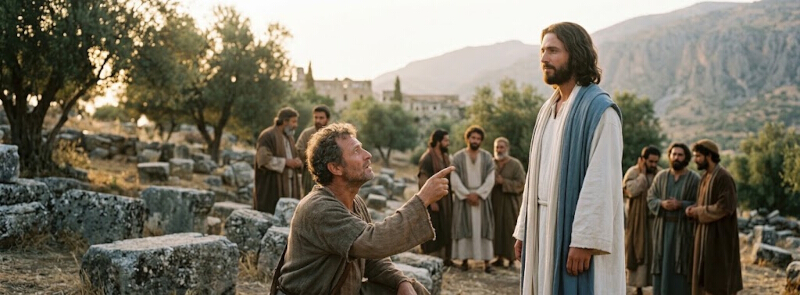
You know the scene from today’s Gospel reading – the disciples, exhausted from their mission, retreat with Jesus for well-deserved rest and reflection. But the crowd, ever-hungry for healing and words of life, pursues them. Jesus doesn’t send them away; instead, he feeds them spiritually and physically, involving the Twelve directly in his mission. This leads us directly into today’s passage (Luke 9:18-22), where we find Jesus praying alone, a characteristic act preceding significant moments in his life.
Finding True Self in Prayer
Why does Jesus pray? This question often reveals our limited understanding of prayer – sometimes seen merely as a way to get things from God or seek comfort in difficult times. But true prayer is about deep connection with the Divine, aligning oneself with God’s will. Jesus, ever-aware of his profound unity with the Father (John 10:30), naturally seeks this connection. And his disciples are with him, witnessing his devotion – perhaps even inspired to later ask, “Lord, teach us to pray.”
The Turning Point: Who Do You Say I Am?
Luke sets the stage for a dramatic turning point: the revelation of Jesus’ true identity. While crowds offer various opinions – John the Baptist resurrected, Elijah, or another great prophet – Jesus poses the crucial question directly to his closest followers: “But who do you say that I am?” Peter, speaking for all, delivers the powerful answer: “The Messiah of God.” This title, “Messiah” (Hebrew) or “Christ” (Greek), means “the anointed one,” referencing the expected Savior King of Israel. Peter declares that the man standing before them is the long-awaited redeemer!
This declaration marks a significant moment in Jesus’ relationship with the disciples. Yet, surprisingly, Jesus orders them not to tell anyone. Why? The people’s understanding of the Messiah was often limited to a political liberator who would defeat enemies and restore past glory. Even after the Resurrection, the disciples themselves still harbored such hopes (Acts 1:6). They were not yet ready to grasp the full, startling reality.
The Unexpected Path: A Suffering Messiah
Jesus quickly dispels any notions of immediate earthly glory. He reveals that the “Son of Man” (a messianic title pointing to a heavenly figure with divine authority – see Daniel 7:13-14) must undergo immense suffering, rejection by religious leaders, death, and then rise again on the third day.
This revelation completely shatters the disciples’ expectations. To them, a suffering and dying Messiah simply made no sense! They couldn’t bear the thought of their Master facing such fate, and the idea of resurrection was perplexing. This was a challenging new phase in their journey – recognizing Jesus as the Messiah while learning that his path to redemption required immense sacrifice.
Deepening Our Understanding
Like the disciples, we too are on a journey of deepening our understanding of Jesus’ identity. We must move beyond superficial notions and grasp the profound truth that the suffering and dying Messiah is the cornerstone of our reconciliation with God. This calls us to embrace the redemptive power within our own pains, disappointments, and failures, finding meaning and healing even in life’s challenges. As we journey further, let us seek a clearer vision of who Jesus truly is – the Savior who embraces suffering to bring about ultimate healing and liberation for all.
Are you ready to dive deeper into understanding who Jesus truly is? Explore more insightful resources on faith and discipleship today!
May God Bless You and Grant You His Peace!