
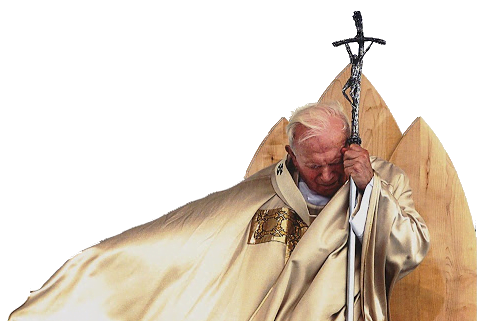

The Solemnity of All Saints is a powerful reminder of our ultimate destiny, inviting every believer to embrace the universal call to holiness and experience profound spiritual joy. Today we celebrate those who have achieved the vision of God in heaven. They have gained the blessedness of eternal life, which is the highest stage of human aspiration. Our faith teaches us that God made us with the capacity to know Him, to love Him, and to serve Him in this life so we can be with Him in the next. Therefore, we thank God today for the triumph of our brothers and sisters who died persevering in their faith. They ran the race to the finish line while keeping the faith, and—with their garments having been washed in the blood of the Lamb—they now enjoy the company of God and the angels forever.
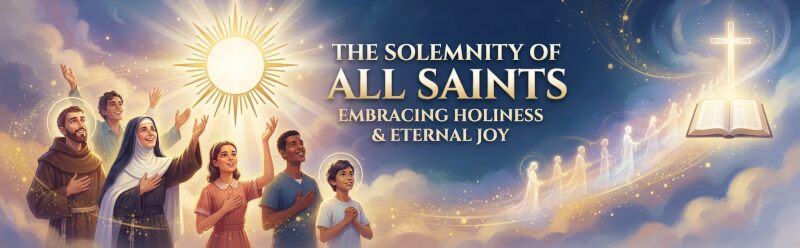
Understanding the Solemnity of All Saints and Our Eternal Journey
The Solemnity of All Saints is a day to reflect on the end of our earthly journey. We know what comes after death, and we know our final destination. Those who welcome the message of Christ and keep His commandments will be dressed in the glorious garments of victory and ushered into the banqueting hall of eternal life, where they will dwell in the presence of God forever. Today, therefore, the Lord renews His call for us to become saints.
Sanctity is an indispensable condition for the attainment of eternal happiness. As the Vatican documents on the universal call to holiness teach us, everyone—whether clergy or lay faithful—has a vocation to holiness, which is manifested in the works of faith and the perfection of charity.
What Does It Take to Achieve Holiness?
What does it take to achieve this perfection of charity? It certainly is not intelligence, physical perfection, or worldly prestige. The saints come from every walk of life and background:
- Academic Struggles: St. John Vianney reportedly struggled with academic studies, and St. Joseph Cupertino needed a literal miracle to pass his theology exams.
- Physical Trials: St. Rita of Cascia bore an open, painful wound on her forehead for decades, yet her spiritual beauty spread like sunlight throughout Italy.
- Temperament: Padre Pio was famously irritable and demanding, yet penitents from all over the world were drawn to his confessional.
- Social Standing: While some canonized saints were aristocrats, many more were hermits, paupers, and ordinary workers.
The characteristic shared by all the saints, and the one sure sign of mature holiness, is none of these external traits. Rather, it is the amazing ability to experience deep joy even in the middle of terrible sorrow. This is what the Lord means when He says that blessed are the poor in spirit, those in mourning, and those who are persecuted for the sake of righteousness. Holiness is a mature friendship with Jesus Christ—a friendship so deep and strong that it enables us to experience the joy of eternal life even while still fighting the painful battles of our earthly exile.
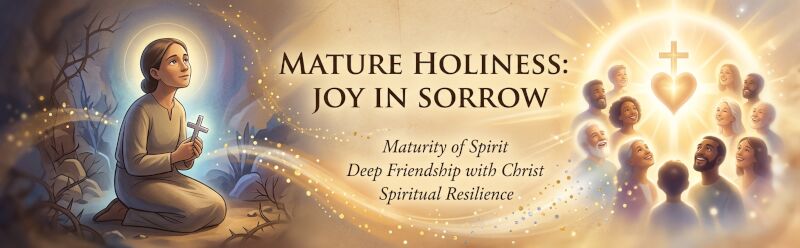
The Solemnity of All Saints – Witnesses of Joy in Sorrow
Throughout history, countless faithful individuals have demonstrated this profound spiritual resilience:
- Jeremiah had this joy in sorrows when he was persecuted for prophesying to his nation.
- St. Francis of Assisi renounced his family inheritance to rebuild the Church of Christ.
- St. Ignatius of Loyola gave up his nobility to spearhead Church renewal during the Reformation.
- St. Teresa Benedicta of the Cross (Edith Stein) left her academic career to become a Carmelite nun.
- Dietrich Bonhoeffer abandoned safety in the United States to return to Germany, ultimately dying in a concentration camp.
This same joy brought peace to Charles Lwanga and the Uganda martyrs as they were burned alive, and filled the hearts of Paul Miki and his companions as they sang God’s praises during crucifixion. It inspired a dying St. Maria Goretti to forgive her attacker and fueled the dedication of modern witnesses like Bishop Oscar Romero, who spoke out against injustice and was martyred while celebrating Mass.
Modern Examples of Faith: The Legacy of Vivian Ogu
More recently, we can reflect on the holiness of life as lived by Vivian Ogu—the 14-year-old Nigerian girl who preferred the assassin’s bullet rather than compromise her virginal purity. Vivian was a chorister in Benin City, a Catholic Charismatic Renewal member, and the parish leader of the Pontifical Association of the Holy Childhood (PAHC), through which she raised money to support sick and orphaned children. She was a mystic and gifted speaker who counseled children on the virtues of holiness and chastity. By the time she was thirteen, Vivian Ogu was already doing a commentary on St. Matthew’s Gospel and was on the sixteenth chapter before she was killed.
On Sunday, November 15, 2009, Vivian’s family home was attacked by armed robbers who tried to violate her sexual purity, but she so strongly resisted that they shot her. As with all Christian martyrs, the killers had the first laugh, but Vivian is having the best and final laugh for her heroic witness to Gospel values. Pope Francis said of Vivian Ogu: “She showed us how we can live our faith without minding the consequences… we have here in Nigeria this good example of a young woman who gave her life for the fidelity of her faith.”
For further reflections on daily spiritual growth, you can explore the sjp2.org daily reflections or read more about parish community life on the sjp2.org about page. Millions of the faithful continue to pray and look forward to the beatification of the holy virgin and martyr, Vivian Uchechi Ogu. May the Solemnity of All Saints inspire us with the courage and wisdom to practice the virtues of holiness in our daily lives. Amen.
May God Bless You and Grant You His Peace!