
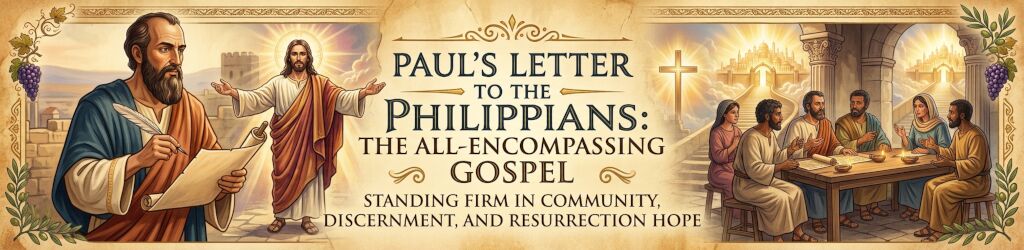
Discover how Paul’s Letter to the Philippians teaches us to avoid legalism, claim our citizenship in heaven, and stand firm. Understanding Paul’s Letter : Firm in Faith, offers modern believers a powerful blueprint for living out an authentic Christian faith amidst cultural confusion and spiritual misdirection. Today, as we conclude our reflection on this profound epistle, Saint Paul urges the early church—and us—to stand firm in the Gospel, resist external legalism, and keep our eyes fixed on our eternal heavenly homeland.
Paul continues to warn the Philippian community against being led astray in their daily walk of faith, urging them to follow his own example (Philippians 3:17–4:1). While this request might initially sound arrogant, Paul—once a devout and strictly observant Pharisee—is utterly convinced that his entire life has been taken over by Christ. Having experienced this radical transformation, he views human existence through a completely new lens: the Way of Jesus goes far beyond mere external Law, serving as the only true metric of interior spirituality.
Traps of Earthly Mindsets vs. Spiritual Freedom
Paul passionately deplores those who “live as enemies of the cross of Christ.” Their lives stand in glaring contrast to Paul’s conduct and the core truth of the Gospel, effectively negating what Jesus accomplished through His death. Where Christ brought liberation, these influencers sought to drag believers back into a stifling, arid observance of ritualism.
Paul’s Letter : Firm in Faith breaks down three distinct markers of these false teachings:
- “Their god is the belly”: Rather than describing gluttony, Paul points to an irrational obsession with dietary regulations. These teachers treated external food purity as the measure of righteousness. Jesus addressed this directly in the Gospels, reminding us that true purity is not determined by what enters the stomach, but by what flows from the heart.
- “Their glory is in their shame”: A veiled critique referencing the pride taken in physical circumcision—an external bodily mark elevated above inner conversion.
- “Their minds are set on earthly things”: Although the Mosaic Law was given by God on Mount Sinai, evaluating virtue purely through physical rituals reduces faith to earthly mechanics rather than spiritual transformation.
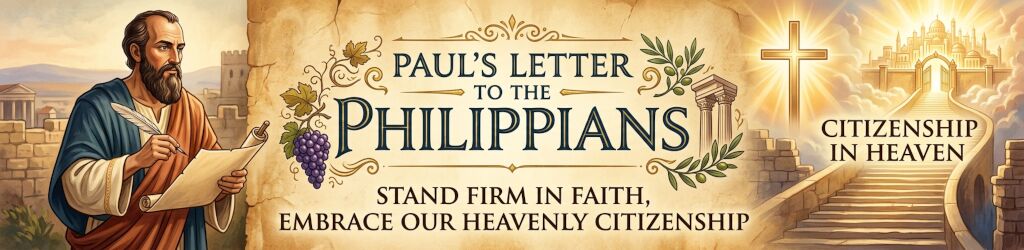
Citizenship in Heaven: The Heart of Paul’s – Firm in Faith
In contrast to earthly religious legalism, Paul reminds believers of their true identity: “Our citizenship is in heaven.” While we reside in the world and actively work out our salvation here, our ultimate allegiance and home lie elsewhere. We await the day when Christ will transform our mortal bodies to conform with His glorious, resurrected body—drawing all creation into harmony with God.
To explore more biblical commentaries and reflections on Saint Paul’s epistles, visit our SJP2 Scripture Study Resource Hub.
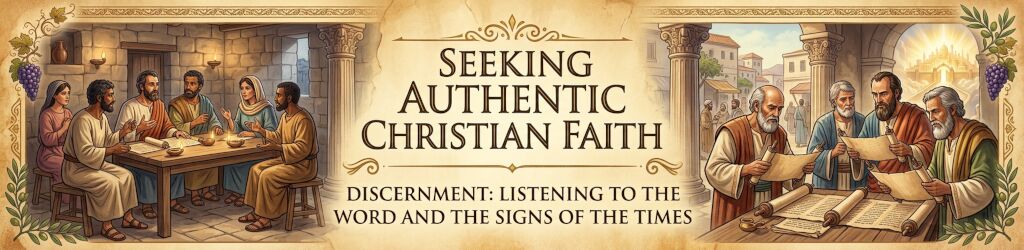
Remaining Firm and Faithful in the Modern World
Just as the early church faced division from those imposing outdated constraints or practicing self-centered license, our communities today can be undermined by actions contrary to the Gospel.
Maintaining an authentic walk with Christ requires:
- Constant engagement with Scripture: Grounding daily decisions in the living Word of God.
- Shared prayer and fellowship: Walking alongside mature believers who model Christ-like fidelity.
- Careful discernment: Reading the signs of the times through the guidance of the Holy Spirit, as taught by the Vatican News Magisterium Resources.
Paul closes his message with immense warmth, calling the Philippians his “joy and crown.” His deep affection reflects the high point of his missionary work. As we conclude our study of Paul’s Letter to the Philippians, we are left with a convicting question: If Paul were to visit our local church community today, would he find in us his joy? Would our lives stand as a crowning testimony to the true freedom of the Gospel?
For further guidance on strengthening your parish or family spiritual life, explore our guide on Living the Gospel Daily at SJP2. To learn more about Paul’s historical journeys and missionary context, read the background historical overview on the Catholic Encyclopedia.
May God Bless You and Grant You His Peace!