

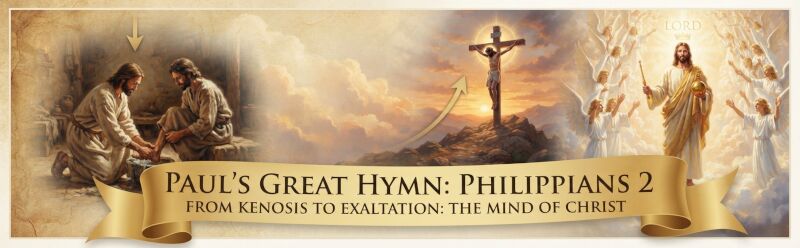
As Christians striving for deeper unity and community, we are often called to look past our own interests and embrace true humility. Paul’s Great Hymn in Philippians 2:5-11 provides the ultimate motivation for this lifestyle by presenting the profound example of Jesus Christ. Paul begins by urging the Philippians to assimilate the very thinking patterns of Christ into the core of their being. This passage is much more than a moral guideline; it is a window into the entire Christ event, teaching us how to love and serve one another just as Christ loved and served us. Whether you are studying Scripture individually or participating in a Bible Study Ministry program, unpacking this text transforms how we view grace, self-sacrificial love, and divine humility.
The Structure of Paul’s Great Hymn: Philippians 2
Scholars often debate whether Paul borrowed an existing early Christian hymn or composed it himself. Regardless of its precise origin, the passage functions as a poetic progression detailing the profound mystery of Christ.
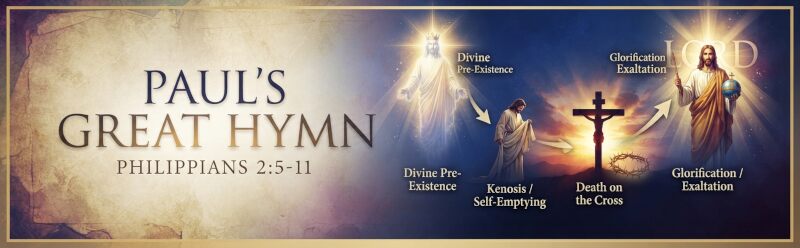
The hymn highlights several distinct theological stages:
- Divine pre-existence as fully God
- The kenosis (self-emptying) of the incarnation
- Further kenosis through death on a cross
- Glorification through resurrection and ascension
- Adoration by the entire universe
- The bestowal of the new title of ‘Lord’
To explore Paul’s Great Hymn’s biblical concepts further alongside parish resources, you can visit St. Peter Parish to see how local faith communities apply these lessons.
The Kenosis: Christ’s Self-Emptying and Humanity
Paul affirms that Christ possessed all the attributes of God and shared full equality with the Father. Yet, unlike Adam—who was tempted to grasp at godhood out of selfish ambition—Jesus willingly laid aside his heavenly privileges.
Paul’s Great Hymn: Embracing the Human Condition
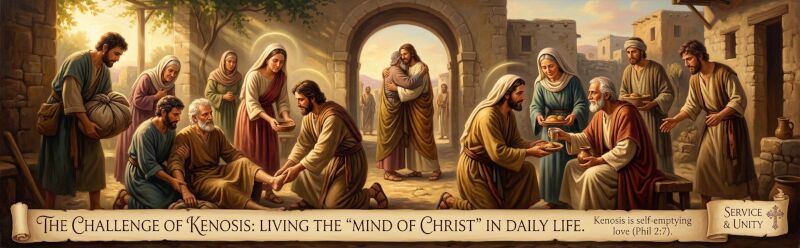
Rather than clinging to divine status, Jesus took on the form of a slave and assumed human likeness. As explored in theological commentaries found at The Vatican, this self-emptying did not mean an abandonment of his divine nature, which is impossible. Instead, it meant veiling his glory to walk among us as a true human being, sharing every human limitation except sin.
From Humiliation to Exaltation
The downward trajectory of Christ’s humility did not stop at the incarnation. He humbled himself further, becoming obedient to the point of death—even death on a Roman cross.
Crucifixion was an instrument of maximum degradation and public shame, stripping away every vestige of human dignity. Yet, this appalling cruelty became the ultimate display of God’s boundless love for humanity. It serves as a striking reversal of Eden: while our first parents found shame in their nakedness after sin, Christ’s innocent suffering redeems our brokenness and opens the door to reconciliation.
Because of this supreme obedience, God highly exalted him and bestowed upon him the name above every name. As detailed in resources from the United States Conference of Catholic Bishops, every knee will bend and every tongue confess that Jesus Christ is Lord, to the glory of God the Father.
Conclusion: Living Out the Mind of Christ
Ultimately, Paul’s Great Hymn cuts straight to the heart of the Christian gospel. It challenges us to adopt the humble mindset of Jesus, learning how to empty ourselves and surrender our lives fully to God’s transformative love.
May God Bless You and Grant You His Peace!