

Thanksgiving: Healing a Divided Nation invites us to pause amidst modern division and rediscover the transformative power of biblical gratitude. While today we celebrate a uniquely American holiday replete with images of Pilgrims, Plymouth Rock, and celebrating the fruits of the first harvest, a national observance of giving thanks actually took root during one of the darkest chapters in American history.
Though harvest meals had long been observed in America, Thanksgiving did not become a national holiday until Abraham Lincoln’s declaration amid our great Civil War. On October 3, 1863, Abraham Lincoln issued his Thanksgiving Proclamation, declaring:
“I do therefore invite my fellow citizens in every part of the United States, and also those who are at sea and those who are sojourning in foreign lands, to set apart and observe the last Thursday of November next, as a day of Thanksgiving and Praise to our beneficent Father who dwelleth in the Heavens. And I recommend to them that while offering up the ascriptions justly due to Him… they do also, with humble penitence for our national perverseness and disobedience, commend to his tender care all those who have become widows, orphans, mourners or sufferers in the lamentable civil strife in which we are unavoidably engaged, and fervently implore the interposition of the Almighty Hand to heal the wounds of the nation and to restore it as soon as may be consistent with Divine purposes to the full enjoyment of peace, harmony, tranquility and Union.”
It is striking that amid profound adversity and national strife, Lincoln called upon citizens to give thanks to God the Father and intercede on behalf of others so that God might heal our wounds and restore unity.

Thanksgiving: Healing a Divided Nation – Biblical Gratitude
Lincoln’s declaration reminds us of the spiritual strength that giving thanks provides during difficult circumstances. His words echo core themes of Christian gratitude found throughout the New Testament.
In Scripture, the pattern of biblical gratitude centers on giving thanks to God the Father through or in the name of Jesus Christ (Romans 1:8; Ephesians 5:20; Colossians 1:3). The motive for our thanksgiving is the unchanging character and redemptive work of God, as all spiritual blessings come from the Father through Jesus Christ and are secured by the Holy Spirit (Ephesians 1:3–14; 2 Thessalonians 2:13).
Giving thanks is how believers express confidence in the sovereignty and goodness of God. True Christian gratitude does not depend on external circumstances, whether in want or in plenty. As Paul writes in Ephesians 5:20 on Bible Gateway, believers are called to give thanks “always and for everything to God the Father in the name of our Lord Jesus Christ.” Doing so is an active expression of submission to God’s will.
How the Apostle Paul Modeled Thanksgiving
Many of the Apostle Paul’s letters open with dedicated sections of thanksgiving, celebrating God’s grace at work in and through fellow believers—even in churches that needed correction (such as in 1 Corinthians):
- For God’s Grace: Paul thanked God for the Corinthians “because of the grace of God that was given you in Christ Jesus” (1 Corinthians 1:4).
- For Proclaimed Faith: He thanked God for the believers in Rome “because your faith is proclaimed in all the world” (Romans 1:8).
- For Growing Love: He thanked God for the Thessalonians “because your faith is growing abundantly, and the love of every one of you for one another is increasing” (2 Thessalonians 1:3).
- For Mutual Fellowship: He thanked God for Philemon because of his love and faith toward the Lord Jesus and toward all the saints (Philemon 4–5).

Thanksgiving: Healing a Divided Nation Guards Unity and Peace
In Colossians 3:15–17 via the USCCB, Scripture directly connects Christian gratitude with communal harmony:
“And let the peace of Christ rule in your hearts, to which indeed you were called in one body. And be thankful. Let the word of Christ dwell in you richly, teaching and admonishing one another in all wisdom, singing psalms and hymns and spiritual songs, with thankfulness in your hearts to God. Whatever you do in word or deed, do all in the name of the Lord Jesus, giving thanks through him to God the Father.”
Notice that thankfulness guards the unity and peace believers enjoy together. When unity is in jeopardy, it is restored by returning in gratitude to God, who rules in peace through Jesus Christ. Thankfulness serves as a spiritual gauge showing how richly the word of Christ dwells within us; when the gospel takes root, gratitude flows freely.
Ultimately, biblical gratitude marks the entire Christian life and transforms our perspective:
- It combats discontentment: Thankfulness fights selfishness by turning our eyes toward what God has given rather than what we lack.
- It reshapes how we view others: Gratitude teaches us to see our neighbors through the lens of God’s character and the work He is doing in their lives.
- It anchors us in sovereignty: Giving thanks shifts our focus from our lack of control to God’s faithful governance over every circumstance.
Healing a Divided Nation Through Thanksgiving Day
As our nation seeks to heal its divisions once again, Thanksgiving Day reminds us where we must turn—toward God with heartfelt gratitude for who He is and what He has done. Practicing gratitude and kindness for the common grace we share goes a long way toward binding up wounds within our local communities.
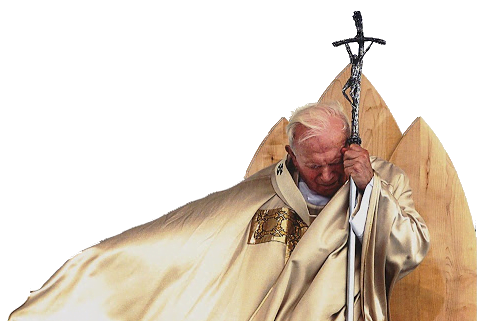
However, lasting renewal comes not merely from being more grateful people in general, but from becoming a more united and grateful church. A grateful church acknowledges that God is the answer—His peace brings reconciliation, His word gives life, and His name defines who we are. By putting the character and work of God on display for a wounded world, embracing biblical gratitude this Thanksgiving Day can bring genuine hope and healing to our divided nation. To explore more reflections on faith and unity, visit the St. John Paul II home page.
You have blessed us, O God,
with the gift of friendship,
the bonding of persons
in a circle of love.
We thank you for such a blessing:
for friends who love us,
who share our sorrows,
who laugh with us in celebration,
who bear our pain,
who need us as we need them,
who weep as we weep,
who hold us when words fail,
and who give us the freedom
to be ourselves.
Bless our friends with health,
wholeness, life, and love.
Amen.
— Vienna Cobb Anderson
May God Bless You and Grant You His Peace!