
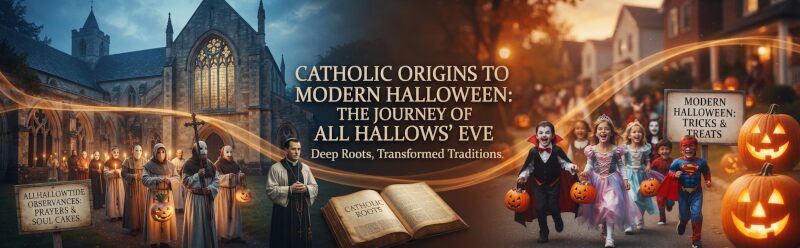
Discover the true Catholic roots of Halloween, from All Hallows’ Eve and souling traditions to its evolution in America. When we think of Halloween, the first images that come to mind are children dressed up in scary costumes going door-to-door to collect candy. At the end of the night, delighted kids empty their loot and begin feasting—all too often leading to sugar-charged restlessness and a future trip to the dentist. However, what this holiday evolved into in the United States is far from how Halloween actually began.
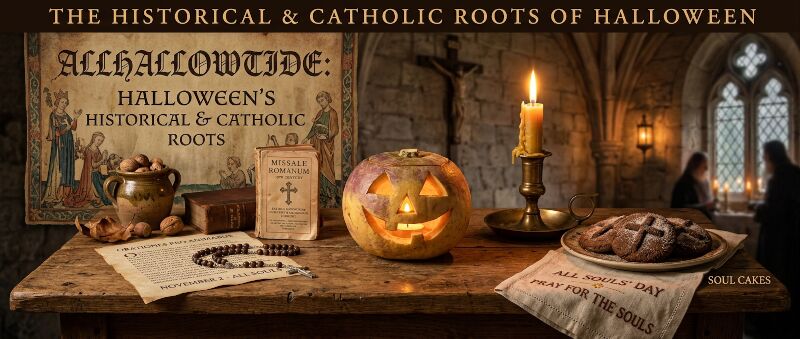
The True Origins of All Hallows’ Eve – Catholic Roots
The word “Halloween” is a Scottish shortening of the phrase “All hallow-even,” literally meaning “All Holy Evening,” and dates back to the 18th century. The English have a similar phrase, “All Hallows’ Eve,” sharing the same meaning. Both terms denote the night before All Saints’ Day on November 1, marking a historical celebration of the holy men and women recognized by the Catholic Church as residing in Heaven.
Pope Gregory III established the feast during the 8th century after consecrating a chapel in honor of “All Saints” in Saint Peter’s Basilica. Later, Pope Gregory IV extended the feast to the universal Church, making it a holy day of obligation. Alongside its celebration, All Saints’ Day was given a special vigil Mass on the night of October 31, which Catholics regarded as a holy evening.
Historical Traditions That Shaped Modern Halloween
In addition to All Saints’ Day, the Church established November 2 as All Souls’ Day, dedicated to praying for the souls in purgatory. On this day, Catholics pray for deceased relatives and friends, often visiting cemeteries. When European immigrants established themselves in the United States, these local customs mingled with the festivities of All Hallows’ Eve.
Several historical customs contributed to modern practices:
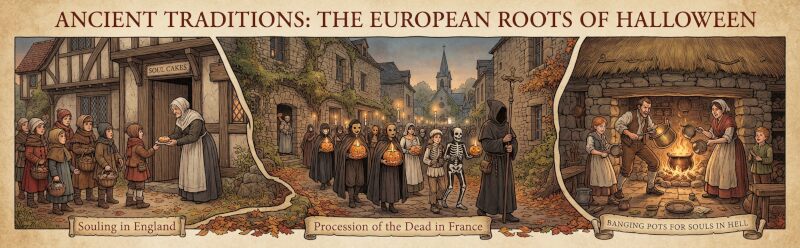
- Souling and Soul Cakes: In various European cultures, a tradition developed of baking “soul cakes” in honor of the faithful departed. Children would go door-to-door asking for these cakes in exchange for praying for deceased loved ones.
- Costumes and Disguises: Many participants wore disguises representing the souls in purgatory who sought these prayers. Processional candles were carried inside hollowed-out gourds or turnips, creating the original Jack-o’-Lanterns.
- Danse Macabre: In France, the faithful created a danse macabre (dance of the dead), representing Death leading a chain of individuals to the afterlife, often brought to life on All Souls’ Day by actors in costume.
- The Irish Tradition: Irish peasants developed an “All Damned Day” on October 31 to ensure souls in hell were not forgotten, banging pots and pans to ward off trouble.
From Sacred Tradition to Secular Community Activity
All of these traditions revolving around All Saints’ and All Souls’ Days merged in the United States as immigrants intermarried and combined customs. The celebration of Halloween spread rapidly throughout the country during the early 20th century, largely transforming into a secular community activity detached from its Christian origins. Businesses quickly recognized the profitability of the holiday, promoting it through advertisements much like modern commercialized Christmas celebrations.
To learn more about how local communities integrate these historic observances or to plan your parish involvement, visit sjp2.org. You can also explore further reading on liturgical traditions through resources like Catholic News Agency and the United States Conference of Catholic Bishops. For more information on local parish schedules and community events, check out sjp2.org to stay connected.
Ultimately, while current Halloween activities may appear entirely secular, they possess deep Catholic roots designed to remind people of their mortality and the importance of praying for souls in purgatory.
May God Bless You and Grant You His Peace!