
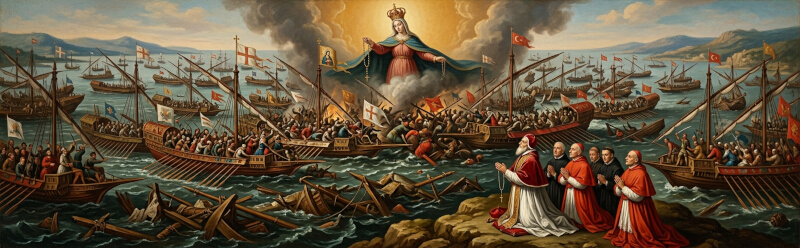
Every year on October 7, the Roman Catholic Church celebrates the feast of Our Lady of the Rosary. This celebration falls exactly one week after Eastern Orthodox and Eastern Catholic Christians observe the Protection of the Mother of God on October 1. Originally called “Our Lady of Victory,” this feast honors a 16th-century naval triumph that saved Europe from an Ottoman invasion. Pope St. Pius V credited this historic victory directly to the intercession of the Blessed Virgin Mary, whom faithful Christians invoked through a massive, Europe-wide Rosary campaign.
A Perilous Threat to Christian Europe
By 1571, the Ottoman Empire wielded immense military strength. Ottoman forces had already conquered Constantinople and much of the Byzantine Empire in 1453, placing vast regions of Christendom under Islamic rule. Over the following century, the Turks aggressively pushed westward across land and secured dominant control over the Mediterranean Sea. Although Catholic forces repelled an attack on Malta in 1565, the Turks seized Cyprus in late 1570. Recognizing the existential threat, Pope Saint Pius V formed the Holy League—a coalition of papal, Spanish, and Genoese forces. He appointed the brilliant commander Don Juan of Austria to lead the fleet. In early October 1571, Don Juan met the massive enemy fleet in the Bay of Lepanto. Despite facing overwhelming odds, the Christian forces used bold maneuvers and fierce bravery to destroy the Ottoman fleet.
Miraculous Intercession and the Birth of the Feast
Historical accounts reveal that Pope Pius V received a miraculous vision of the Holy League’s triumph at the exact moment it occurred. When official reports confirmed that the fleet had captured or sunk all but 13 of nearly 300 Ottoman ships, the entire Christian world recognized Mary’s powerful help. Pope Pius V instituted a special feast honoring Our Lady of Victory on the first Sunday of October. Two years later, Pope Gregory XIII renamed the celebration the Feast of the Holy Rosary to highlight the spiritual weapon behind the victory. Today, the Church observes the feast on October 7, the anniversary of the Battle of Lepanto. This celebration sparked the lasting tradition of dedicating the entire month of October to the Holy Rosary.
The Enduring Power of a Spiritual Weapon
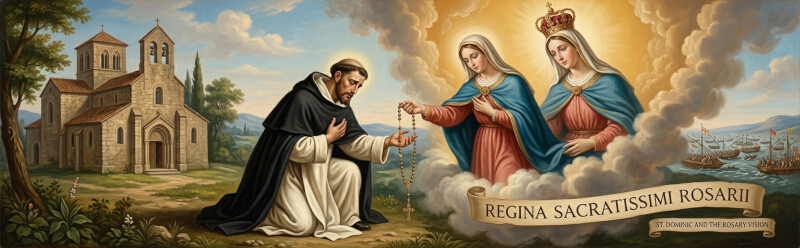
While the Rosary feast began in the 16th century, the devotion itself originated centuries earlier. Tradition holds that the Blessed Virgin Mary appeared to St. Dominic in 1206, giving him the Rosary to combat the Albigensian heresy. Centuries after Lepanto, Pope Leo XIII strongly championed the Rosary, writing 11 encyclicals on its importance and adding “Queen of the Most Holy Rosary” to the Litany of Loreto. In his 1883 encyclical Supremi Apostolatus Officio, he noted that Catholics historically flee to Mary during times of crisis and grave danger. During her apparitions at Lourdes and Fatima, Mary held a rosary and urged the world to pray it daily for peace. Military weapons have changed drastically over the centuries, but the Rosary remains an unbeatable spiritual weapon for peace and renewal today.
May God Bless You and Grant You His Peace!