
Faithful Apostles and Patron Saints
Explore the inspiring lives, missionary zeal, and enduring legacy of Saints Simon and Jude—two of Jesus Christ’s faithful apostles who sacrificed everything to spread the Gospel across the ancient world. Saints Simon and Jude are often confused with more prominent figures in the Gospel narratives, meaning we know comparatively little about their early biographical details. Despite the limited historical records, we know their most distinctive identity: they were steadfast and devoted followers of Jesus Christ.
Who Were Saints Simon and Jude?
These two dedicated apostles spent years walking alongside Jesus during his public ministry, witnessing his miracles, absorbing his teachings, and receiving the Great Commission to proclaim the Christian faith to all nations.
Saint Simon the Zealot: A Passionate Apostle
St. Simon is traditionally known as “the Zealot” or “the Canaanite” to distinguish him from St. Simon-Peter. Biblical scholars suggest this title refers either to his righteous zeal for the Mosaic Law or to a prior association with a Jewish nationalist political faction.
Key biblical references to St. Simon include:
- Gospel Lists: Simon is named in the lists of the twelve Apostles in Matthew 10:4, Mark 3:18, and Luke 6:15.
- Acts of the Apostles: He is mentioned in Acts 1:13 during the selection of Matthias to replace Judas Iscariot.
Like many early believers, St. Simon fades from the direct Biblical narrative following the historic events of Pentecost.
Saint Jude Thaddeus: The Patron of Lost Causes
The Apostle Jude is also known as Thaddeus, a name used in scripture to clearly distinguish him from Judas Iscariot, the apostle who betrayed Jesus. He was the brother of St. James the Less.
St. Jude in the Gospels
While Jude is primarily listed alongside the other followers of Jesus, he plays a notable role during the Last Supper in the Gospel of John. He asks Jesus a pivotal question:
“Lord, how is it that you will reveal yourself to us, and not to the world?” — John 14:22

Patronage of Impossible Causes
St. Jude is widely revered today as the patron saint of impossible causes and desperate situations. This devotion likely stem from historic overlap with the author of the New Testament Letter of Jude (a relative of Jesus mentioned in Matthew 13:55 and Mark 6:3), who encouraged believers to persevere through severe persecution. Because of his powerful intercession for lost causes, St. Jude is frequently invoked in hospital ministries and by individuals confronting life-threatening illnesses.
Missionary Journeys and Martyrdom
Prominent traditions within the Western Church hold that St. Simon preached the Gospel across Egypt, while St. Jude evangelized throughout Mesopotamia.
Honored Together on October 28
The two apostles eventually reunited to travel together into Persia, where they courageously proclaimed the good news before suffering violent martyrdom:
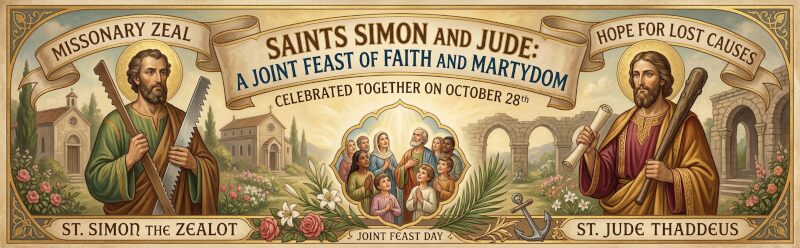
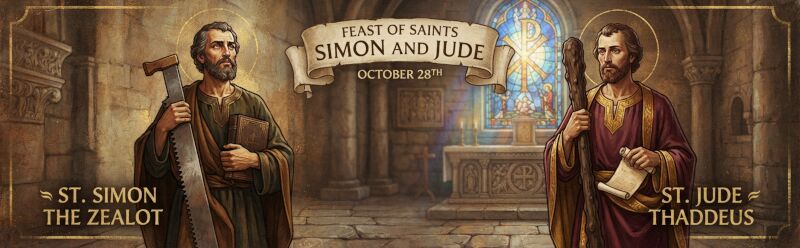
- St. Simon: Traditional accounts attribute his martyrdom to being sawed in two, leading to his historical recognition as the patron saint of woodcutters and sawyers.
- St. Jude: Accounts record that St. Jude was martyred alongside Simon in Persia, often depicted holding a club or halberd.
Because of their shared missionary work and simultaneous death, the Western Church honors Saints Simon and Jude together on their joint feast day, celebrated annually on October 28th. In contrast, Eastern Christian traditions record varying accounts—placing Simon’s death in Persia, Samaria, or Edessa—and celebrate their feast days separately.
Today, the legacy of Saints Simon and Jude continues to inspire millions of believers seeking hope, strength, and faith in the face of life’s greatest challenges.
May God Bless You and Grant You His Peace!