

Feast
The Church presents us with the Feast of Saint Mark on April 25th, a date that virtually always falls during the Easter Season. Mark is an interesting figure in the Christian tradition. A young man identified as Mark or John Mark is referred to in the Acts of the Apostles and several of the Epistles. His mother was a prominent member of the Jerusalem community of Christians. It was to her home that Peter rushed after being released from prison by an angel. We know Mark was a very good friend of Peter and possibly even a close relative. We know that Mark was a co-worker of Paul, who seemed to have a disagreement with him, and then followed Peter to Rome, as the author of the first reading today (1 Peter 5:5-14) tells us.
The celebration of any Saint’s life and death, especially the big feasts of Mary and the Apostles, always have a sub-text of reflection about the nature and mission of the Church. Here the subtext is the very text of the Gospel for today (Mark 16:15‑20). The mission of the followers of Jesus, the whole Christian Church, is to go to the whole world and proclaim the Triune God by word and act.
The nature of the Church, the baptized Body of the Risen Christ, is to be representative on earth of the nature of Christ himself. Evil (symbolized by serpents) will have no power to “bite” us. We often use the image of being bitten when we speak of compulsive or addictive behavior that is destructive to us in some way. We speak of being “bitten” by the shopping bug; or being bitten by a love of a sport or an entertainment star. Jesus characterizes these compulsive behaviors as bitten by poisonous snakes – because the addiction in full bloom cuts us off from the demands (and rewards) of love, and eventually poisons us toward goodness and the truth about life, thereby killing our spiritual life.
Rather than being subject to the destruction of poisonous things, the members of the Resurrected Christ will be able to heal human suffering and bring peace to those deeply disturbed, just as Jesus did. Even the gift of “languages” is about being able to understand and be understood by those who are “different” from us: the color of their skin, people of a different religion, the foreigner, the alien, the outcast; and to break through the character of difference that causes misunderstanding and division among humans who cannot communicate. Thus, “speaking in tongues”, that is, many languages at the same time, is really about being able to reconcile humans who can’t seem to understand one another.
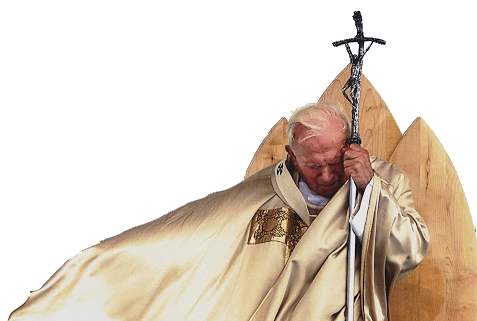
This representation of Christ that is commanded in Mark’s Gospel is fairly “heady stuff” unless we pay close attention to the reading from First Peter. This text challenges disciples to behave in a manner that invites people into friendship and that does not take who we are or what we do too seriously. We are to remember that we are not God, not even when we attempt to faithfully represent God’s interests. Because we are not God, we do not always know or understand God’s will. One of the classic examples of this is the statement attributed to Pope Urban II who said, “God wills it” when he called European soldiers to a war against Muslims. Some eight centuries later, another Pope, St. John Paul II, declared a public repentance for the sin of the crusades against Muslims and against Jews. As Susan B. Anthony is famously quoted, “I distrust those people who know so well what God wants them to do, because I notice it always coincides with their own desires.” In hindsight we can often see that our ideas of what God wants are too often skewed by what we want. But, the first reading tells us, if we remember that we are not God, and recognize our human limitations, we can pray to recognize the kind of evil that subtly seeks to undermine any true representation of God that we are called to make.
I find myself most challenged by this paradox of speaking and living out the Good News as a Disciple of Jesus and remaining humbly aware that any representation I make of God’s desires will be limited, and probably at least partially, wrong. In the light of the Easter mystery, and in the name of St. Mark, who is thought to be the author of the first of the four Gospels that we Christians assert to be God’s word, we pray that we can be faithful, humble, and courageous disciples representing God’s compassionate love in a very frightening world filled with roaring lions, poisonous snakes, and toxic drinks.
May God Bless You and Grant You His Peace!